
I just completed my third cycle of chemotherapy this week. I’ve reached the halfway point of the treatment, which seems like an accomplishment in and of itself. The week after next I’ll have a repeat PET scan to assess response to what’s already been completed, along with bloodwork to check my blood counts, followed by a visit with my oncologist to review the results and determine where we go from here. Most likely, it will be completion of the full chemo cycles, but if by some miraculous turn there is significantly better response we may be able to move on to the next phase and return to oral medication and regularly scheduled Lupron injections. Regardless of the outcome, I am good with it, either way.
I’ve discovered that when you’re sitting in the chemo chair for a couple of hours as the IV runs in, you have a lot of time to think about things. When my brain has that much leeway, look out below. It sometimes wanders into strange territory, but thankfully, most of the time is spent in what the Bible terms ‘meditation’. Not the Far Eastern type, but thoughts that center on God, His love and blessings, His person, and then just…quiet, waiting for Him to teach me what He wants me to know. The other day I even found myself singing (quietly, after both my neighbors were gone) Chris Tomlin’s version of Amazing Grace.
A couple of interesting and important concepts came to mind during this session. The first had to do with learning patience, which I spoke about in one of my Facebook posts a few days ago. But then I had a longer thought session about the idea of how much we want to control our circumstances and how little we actually do. The fact of the matter is we can’t control the circumstances that surround us constantly; the only thing we can control is how we choose to respond to them.
I recall the conversation with my wife when the subject of chemotherapy was first broached with Dr. Seghal. Having been through it herself four years ago, she tried to persuade me against it, knowing full well what happens during treatment, and afterward. While I understood the reason for her reticence and advice, my viewpoint was different on the matter.
I have been dealing with prostate cancer for eighteen years now. Things went very well for about the first ten years; PSA’s remained very low, everything looked to be fine. Then I got lax about keeping up with them, until my health practitioner pointed out that it needed to be checked, especially since it had been some time since my last check. When it was found to be alarmingly high, and a CT scan for something entirely different revealed a ‘suspicious lymph node” near my right kidney which a subsequent biopsy showed was prostate cancer cells, treatment was begun that continues, and will continue, for the rest of my life.
It wasn’t until I met Dr. Seghal, who explained that this will never completely go away or be completely eliminated and needed to be treated as a chronic disease, that I finally understood how to choose to think about what needed to be done. I had no control over the circumstances, but I had a choice about the treatment. I could refuse the chemotherapy and take my chances, knowing it would probably shorten my life but let me live out the rest of my days without the adverse stuff from the chemo. Or, I could press through whatever came with the treatment with the expectation that it would decrease the tumor enough to once again manage with oral agents and Lupron.
We don’t control our circumstances; only God can manage them, and for those who have given themselves to Him through surrender and obedience to the call of His son Jesus Christ He gives this promise: ” I am working all these circumstances together for your benefit, to those who love Me and are called according My purposes” (Romans 8:28). If you are a child of God, born through the blood of Jesus, while your circumstances are random, under God’s direction each has a purpose.
That leaves you with two choices, but usually ends up with only one question, no matter where you find yourself in relationship to God: “Why is this happening to me?” Without that relationship, the answer leads to despair, moaning and groaning about the unfairness of it all, sometimes going so far as to blame God for letting it happen. It’s possible the anger is a result of feeling a loss of control that you never had. The end of the matter is this: without God, you will find it difficult, if not impossible, to find any hope in your situation, and while you may find some causation for it (poor life choices, for example) you may still struggle with finding the “why”.
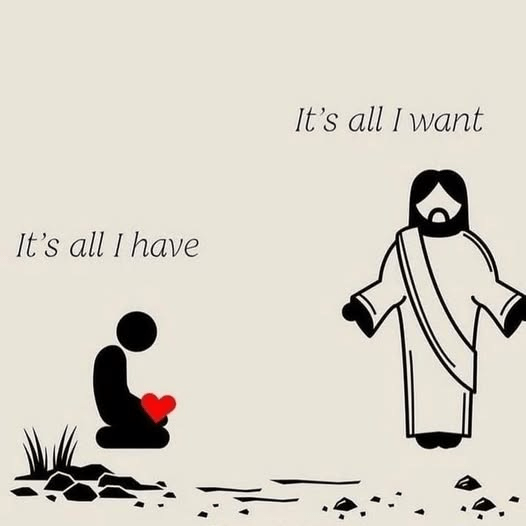
The Christian asks the same question, but with a different perspective. He or she realizes that God doesn’t always engineer their circumstances; He doesn’t cause cancer, broken relationships, or life-changing accidents and such. But He can use those to get you to the same question: “Why did this happen to me?” The answer will be very different, as mentioned above. The answer goes back to what I consider is the one and only question God ever really asks us: “Do you trust me?” He wants our love and worship, but that requires an inordinate amount of trust on our part, just as it is true in any relationship. The only way we can demonstrate that trust is through seemingly impossible circumstances that overwhelm us, and over which we have absolutely no control. When we believe that God is using these circumstances and our lives demonstrate that belief by exhibiting joy, peace, contentment-and gratitude- it shows our trust in God. And as our trust grows, it becomes easier to trust even in more difficult circumstances.
Before I was first diagnosed with cancer, I went through a difficult time that nearly ruined my family and career, but was necessary to break my terrible ego and pride. It accomplished that task, and taught me humility and trust as God put me back in the same situation in order for me to repent and try to resolve the damage I had done. It was several years after that I was diagnosed, but the initial experience and the time between during which God had begun to change me into the vessel, the instrument, the man He desired me to be prepared me to trust Him with my cancer. My answer to Him was to trust His will and His work through the treatment and outcome, and to seek to honor and glorify Him throughout the process. Each subsequent time the cancer flared up, the answer was the same. Chemotherapy became just the next step in the process.
I apologize for injecting so much of my situation into this, but it’s the only frame of reference I have. The message I want to leave with you is this. In any circumstance, the only thing we can control is the choice we make to respond to it. We can give in to anger, despair, and if not addressed and resolved, depression and darkness. Or, we can find meaning in it, as well as joy in life itself, gratitude for the blessings we enjoy even in the midst of suffering, and even peace and contentment. But it is only when we have a relationship of love, obedience and surrender to God that we will truly find the meaning and joy.


Leave a comment